Before the masserie, the old fortified farmhouses of Puglia, before the QR codes, before anything else: a chef de rang's uniform, a dining room looking out over Hyde Park, and a man in the lobby with golden keys on his lapel.
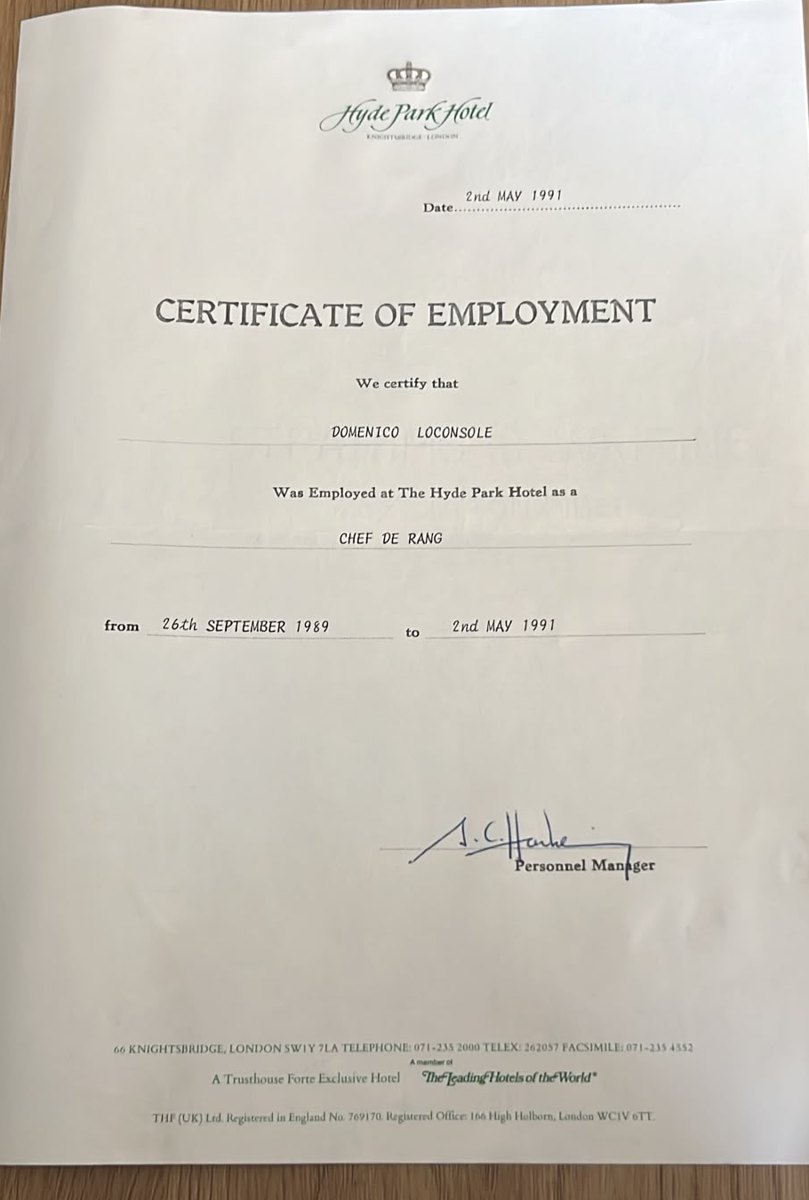
26 September 1989
Domenico Loconsole starts work at the Hyde Park Hotel in London: 66 Knightsbridge, a Trusthouse Forte Exclusive Hotel and a member of the Leading Hotels of the World. Today the building is the Mandarin Oriental Hyde Park. His role: chef de rang, in charge of his own station of tables, the old-school craft of the dining room.
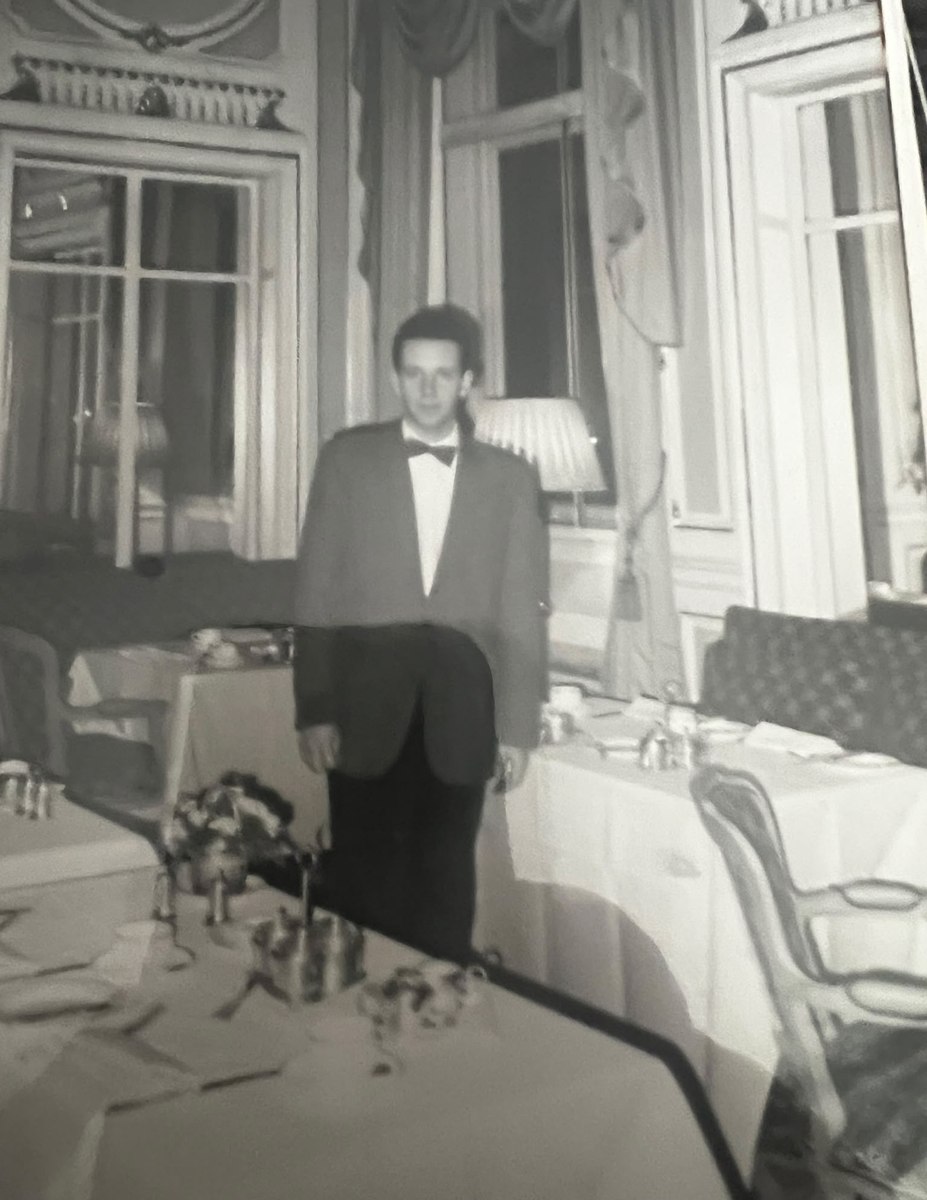
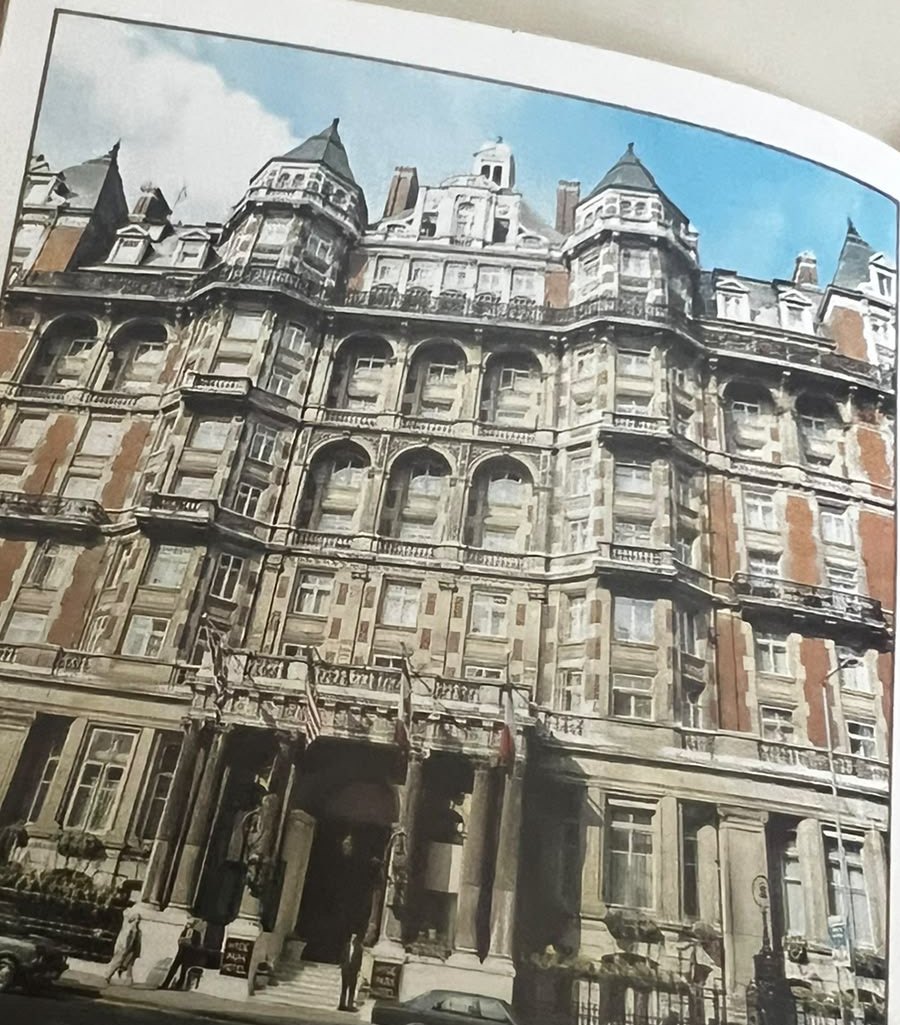
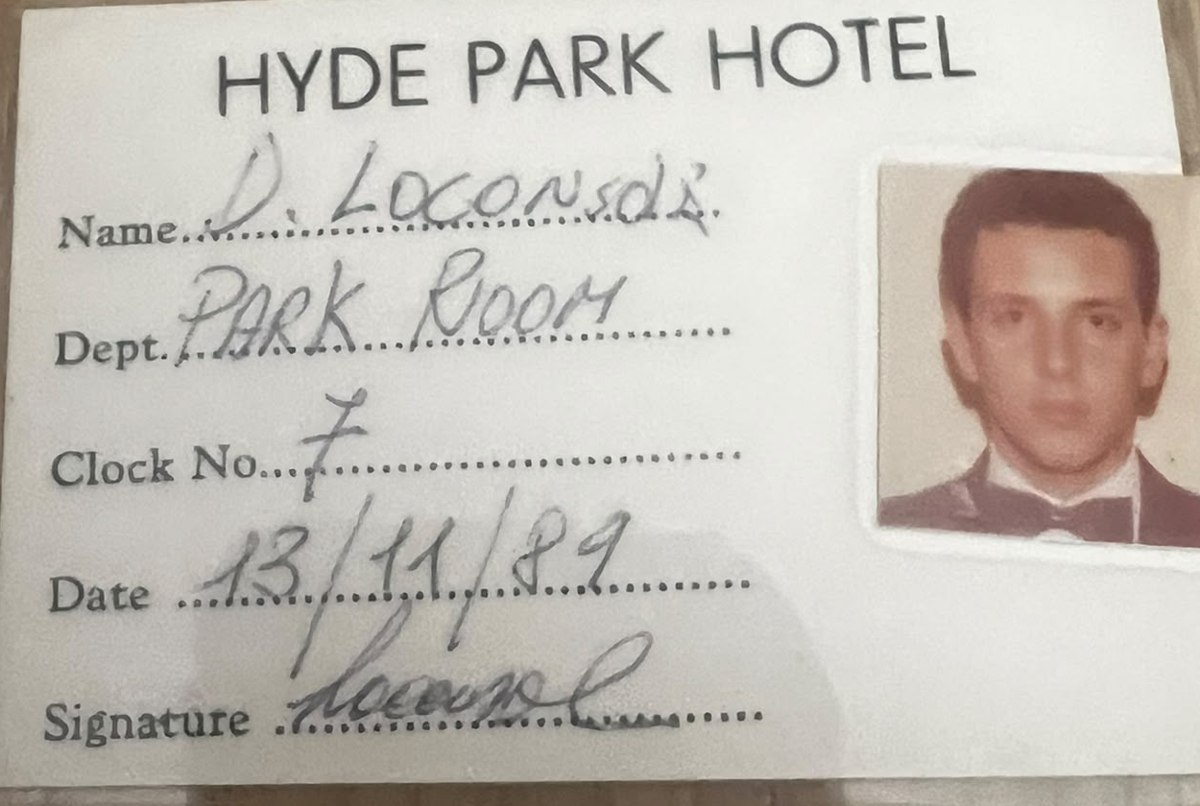
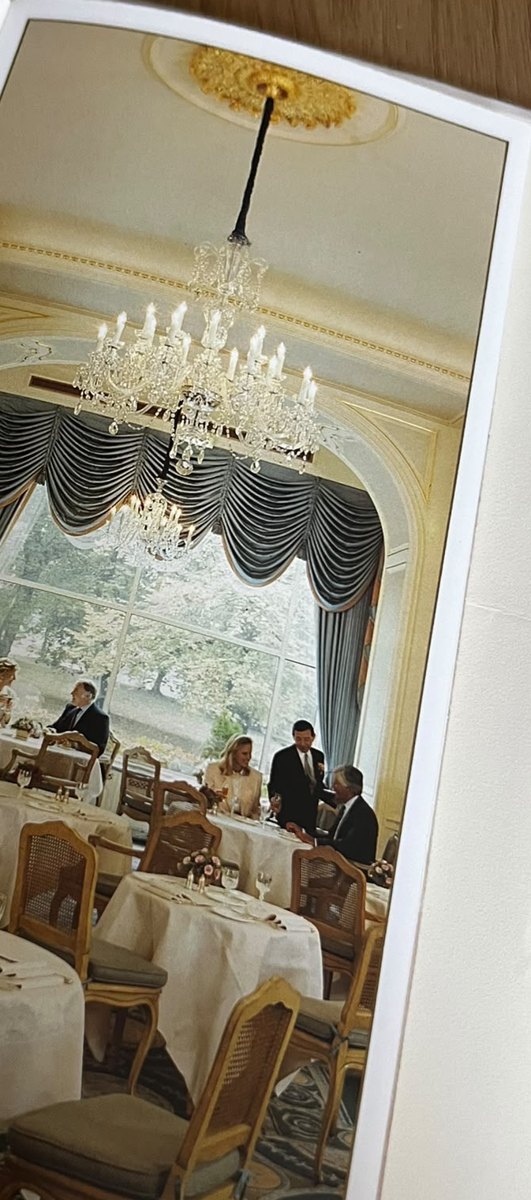
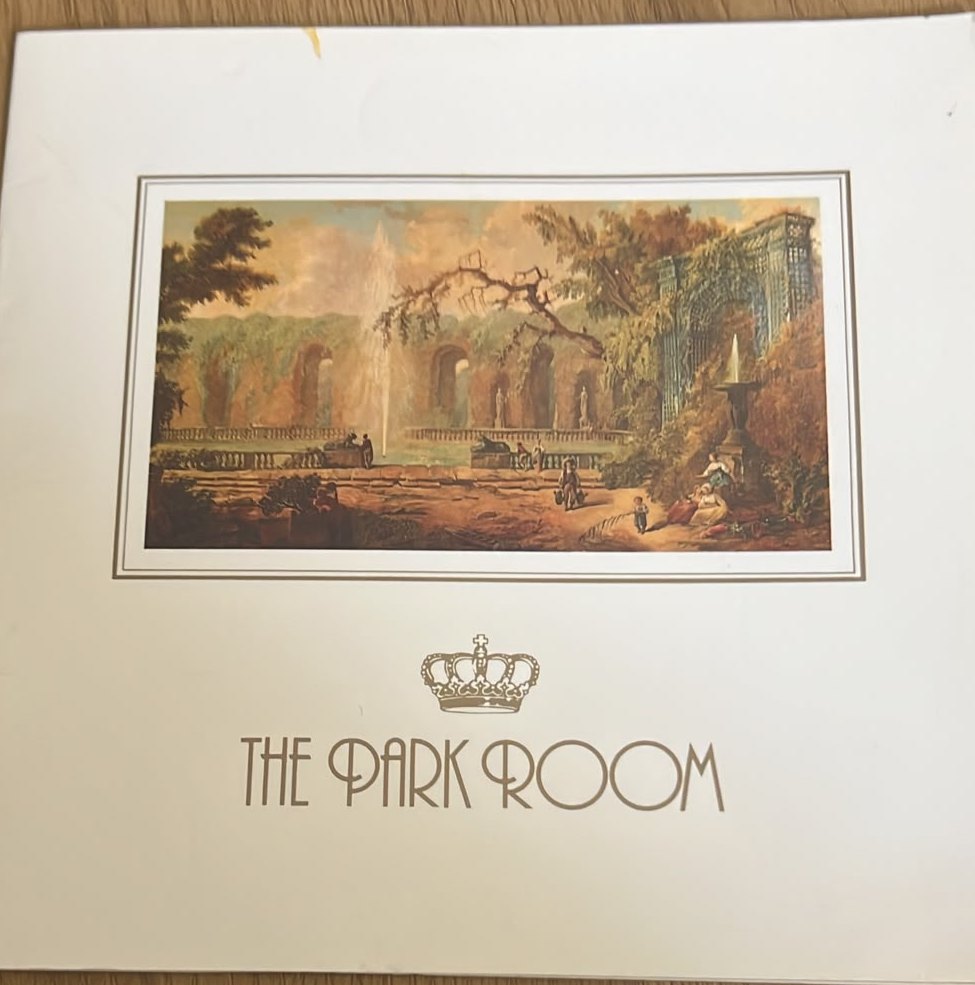
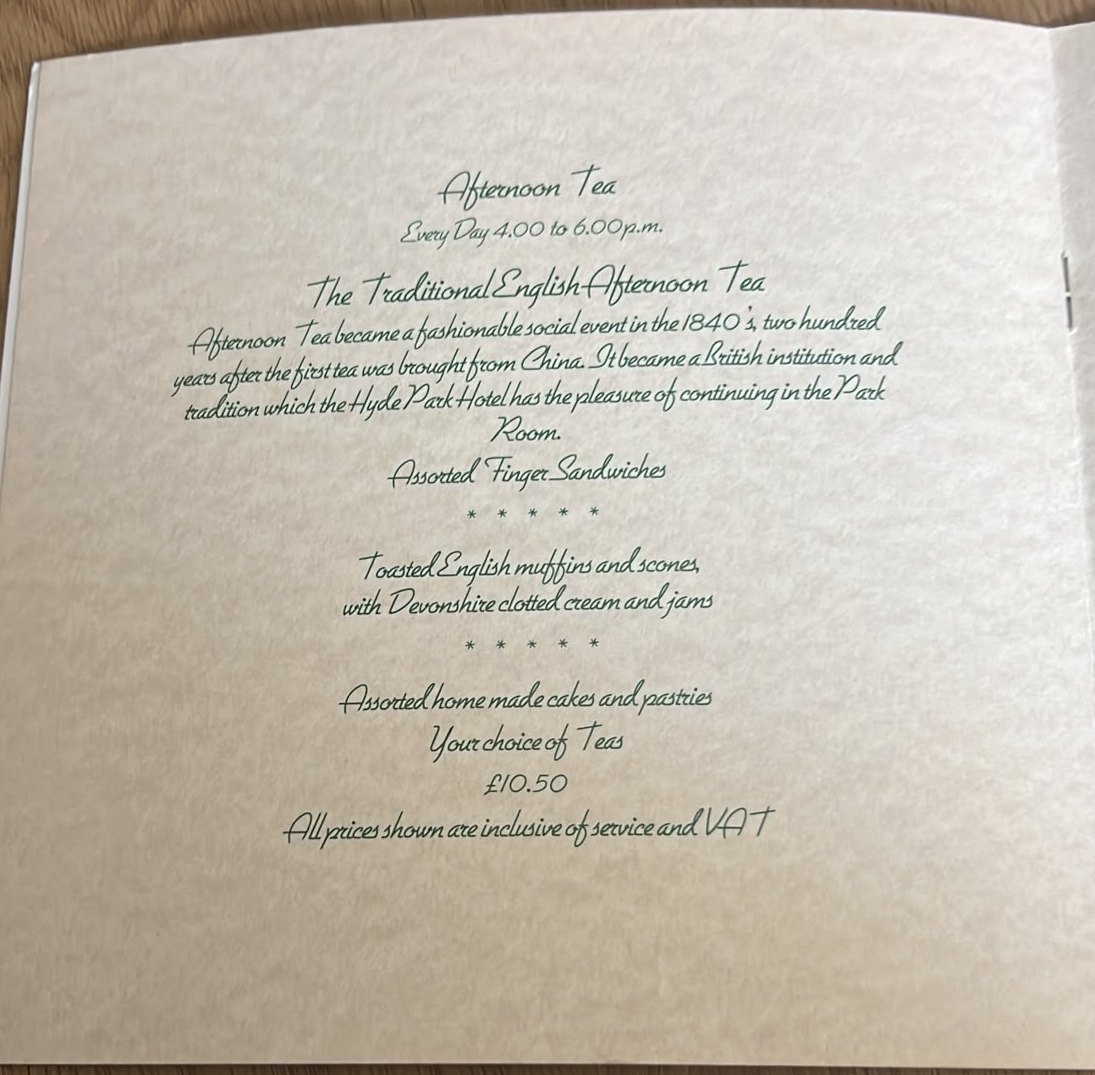
The Park Room was the dining room with the tall windows onto Hyde Park: breakfasts, lunches “with incomparable views”, and afternoon tea at four, the English tradition the hotel had looked after for a century, served on fine china, £10.50 all inclusive. It was Domenico's station: the staff envelope bearing his name simply reads “Mr D. Laconsole — Park Room”, with the rough-and-ready spelling the English kept for surnames from Puglia.
1 February 1990
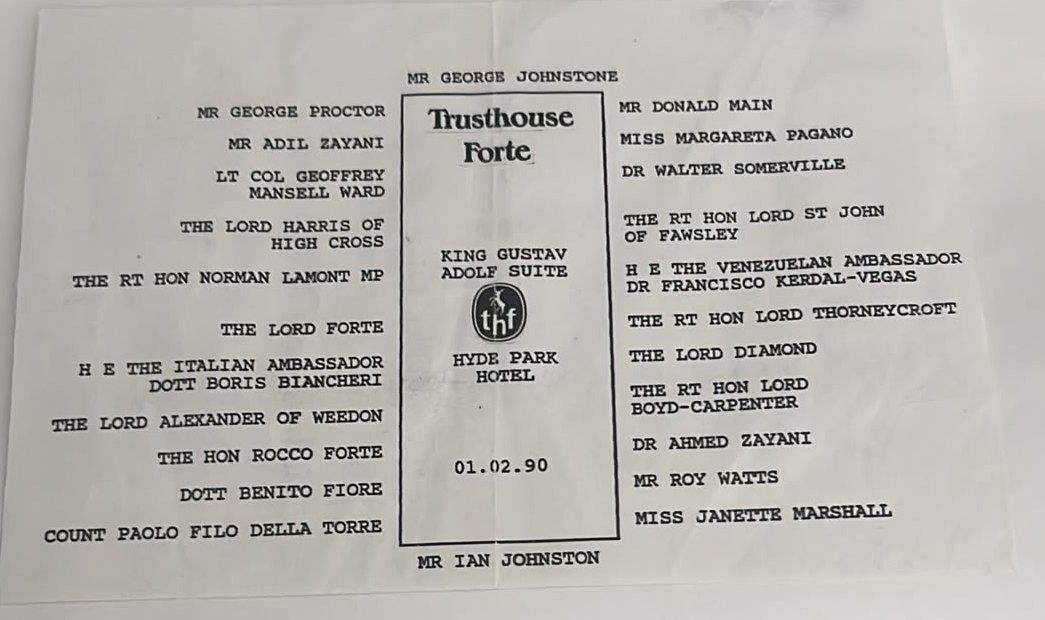
The King Gustav Adolf Suite. The owning family in person, Lord Forte with the Hon. Rocco Forte, gathers its world around the dinner table: the minister Norman Lamont, the Italian ambassador Boris Biancheri, peers and diplomats. To serve at that table, being on duty was not enough: you had to be called. Domenico was called. He has kept that evening's table plan for thirty-five years.
“And then the biggest call of all: to serve not at the hotel, but at Rocco Forte's home.”
— Domenico
Private service, inside the family's own walls: for a dining-room brigade there is no higher mark of trust.
And every day, crossing the lobby, the same scene: the concierge, golden keys on his lapel, and the guest who asked for the impossible and got it. The table nobody could find, the sold-out tickets, the right advice whispered at the right moment. One face, for any request.
The Park Room was so famous that a Japanese magazine photographed it for its readers in Tokyo: the brigade lined up at the buffet, the chandeliers, the painted wall. And on that page, among the six posing for the camera, there he is.
“One day two young women who had come all the way from Japan for the famous afternoon tea
called me over to their table. They showed me the magazine: ‘Look, this is you.’”
— Domenico
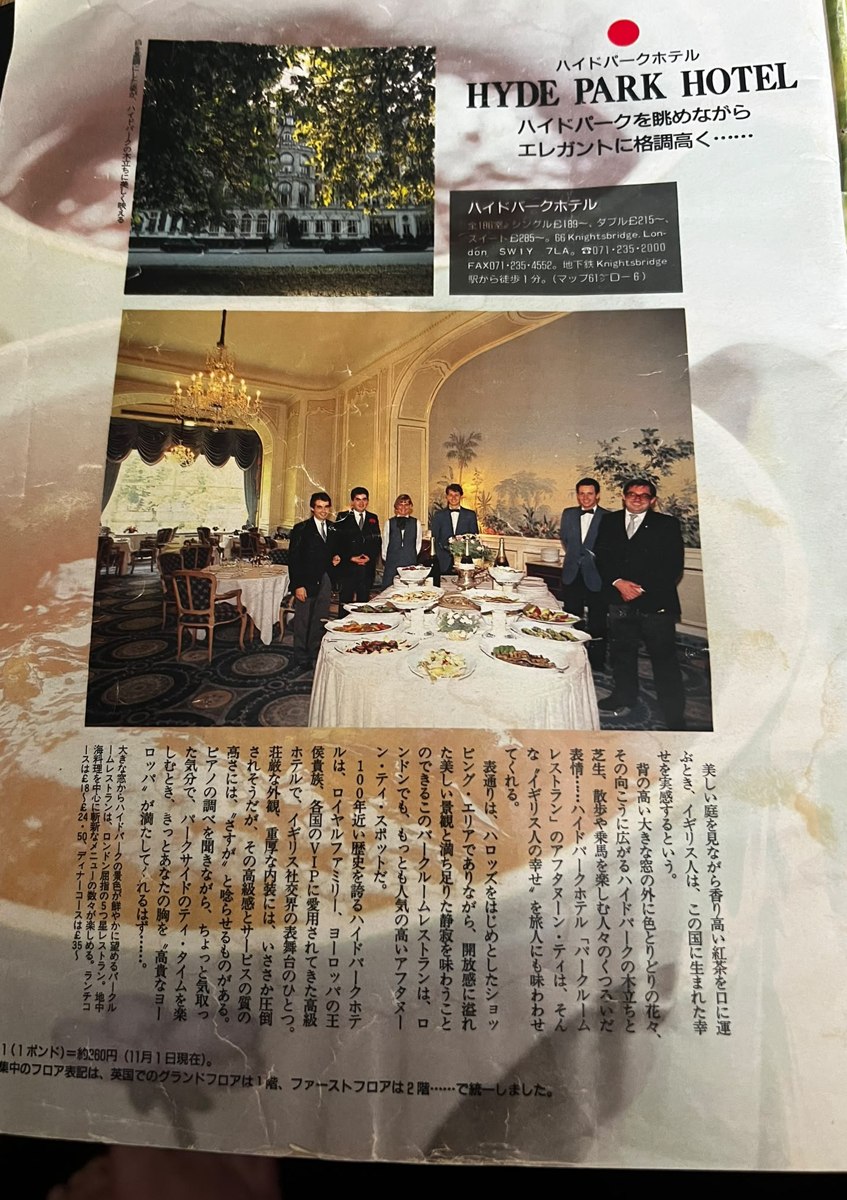
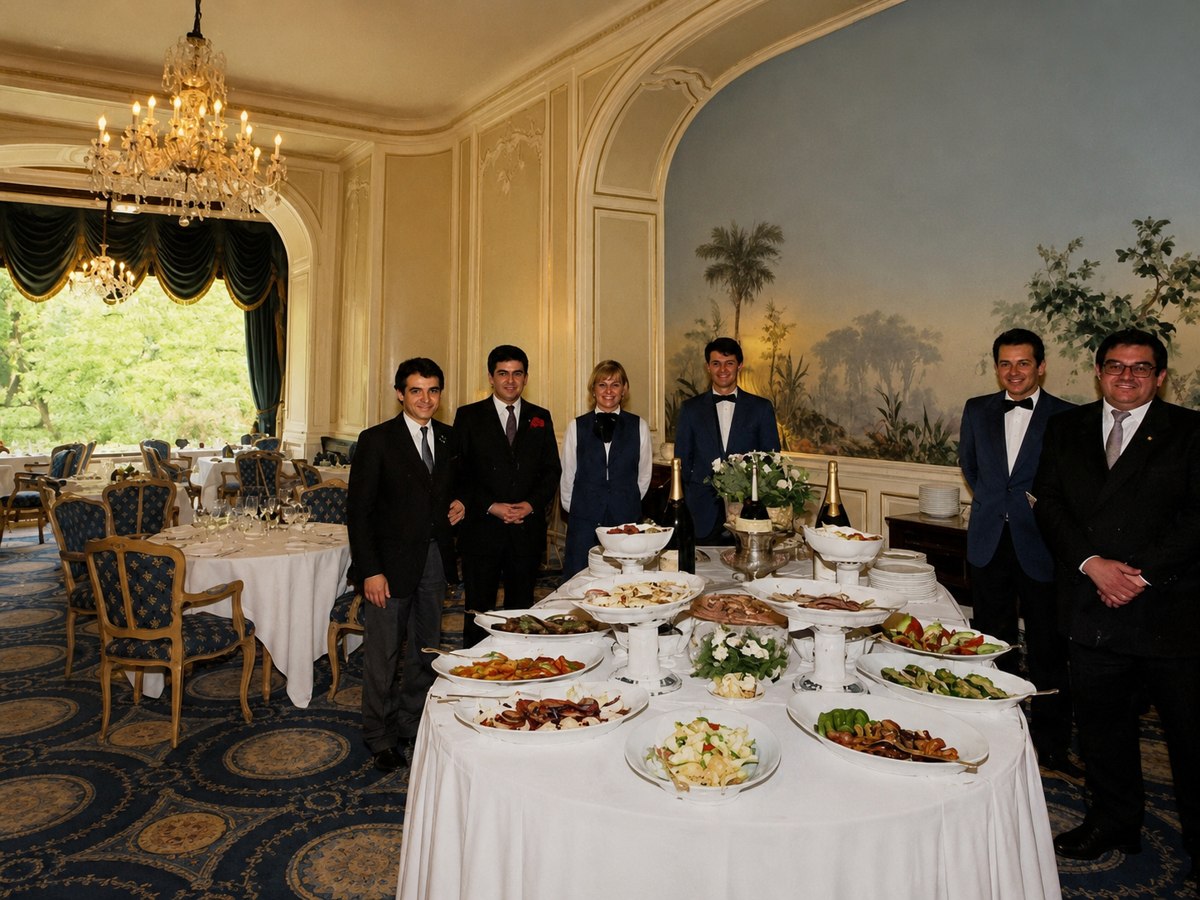
The Park Room was worth a journey from the other side of the world. Thirty-five years before QR codes, it is exactly the hospitality Cortése promises the masserie: the experience international guests cross the world for. Cortése's three languages come straight from there.
Among the things Domenico has kept are two documents that, read today, take your breath away.
The first is the booklet the hotel gave to every guest: the London Weekly Diary of Social Events, “with the compliments of Hyde Park Hotel”. Inside: the week's concerts, the exhibitions, the right restaurants, the Changing of the Guard. The local area, curated by the hotel, placed in the guest's hands.
The second is the Weekly Sheet, the staff's working sheet: the week's functions typed out room by room, hour by hour, cover by cover. The one for 20–26 November 1989 also lists a lunch for Lord Forte in the King Gustav Adolf Suite.
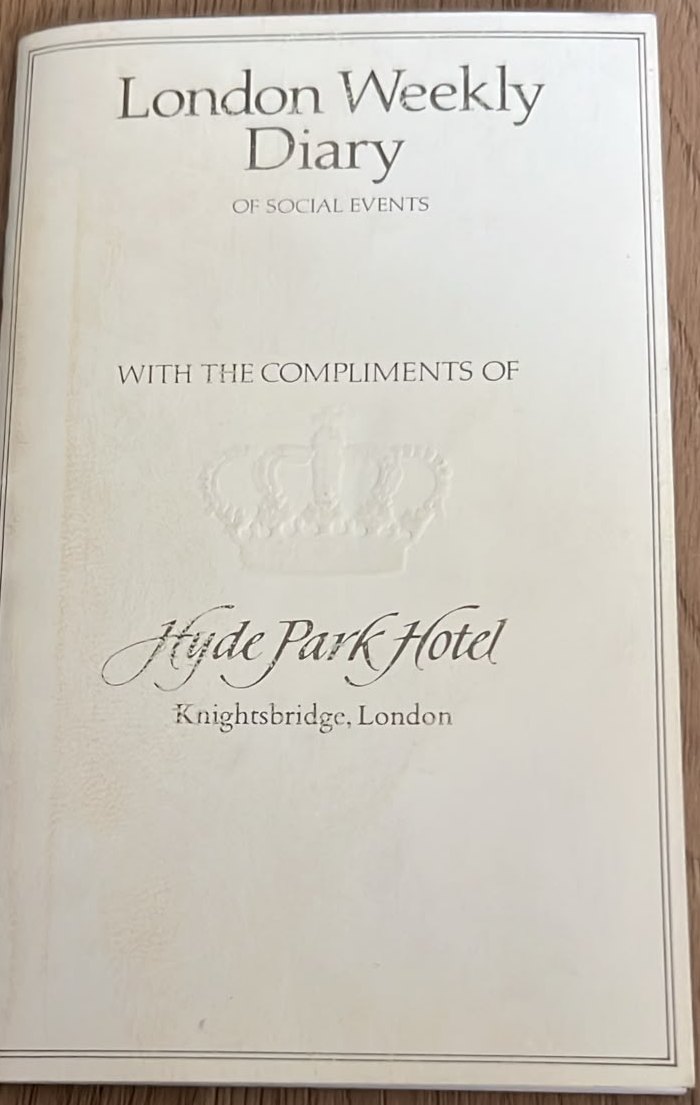
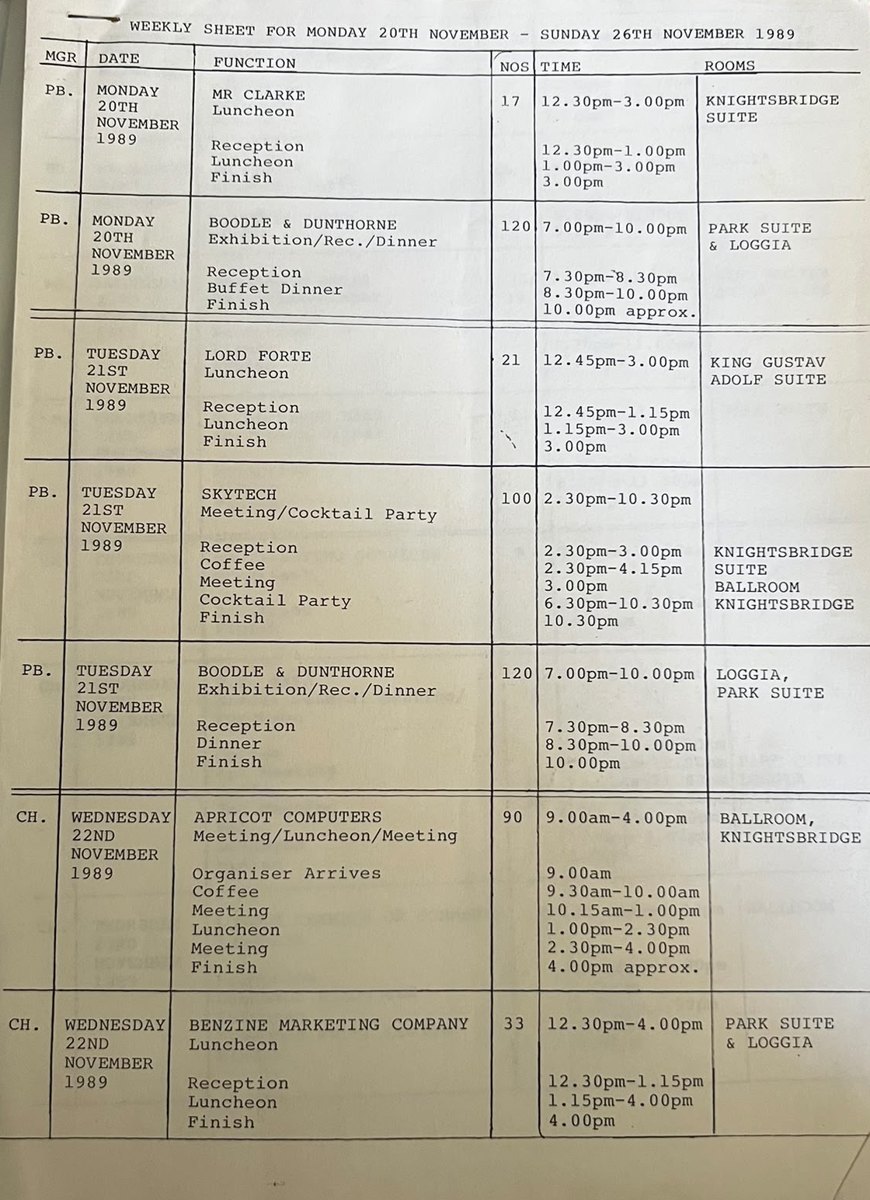
The guest's app and the staff's board. It was Cortése, in 1989, on paper.
Thirty years later
Domenico went home, to where everything smells of olive trees. And going round the masserie and historic houses of his own region, he recognised one precise gap: that craft, the concierge, had never existed here. Not for lack of style: for arithmetic. It is a grand-hotel salary, and a twenty-room masseria could never afford it.
So he built it. It is called Cortése, from cortesia (courtesy) and corte (courtyard), and it does the job Domenico watched every day as he crossed the lobby:
From the guest's phone, with the staff who are already there. No app to download, no robots: a QR code in the room, and the most elegant craft in hospitality exists again, even where it could never reach before.
 Cortése